For most of the twentieth century, the outdoor sauna in the UK was something you saw in glossy property listings of country estates, in corporate spa retreats, or in occasional Scandinavian-import projects from the early 1990s. The notion that a UK family with an ordinary garden might install one was at the edge of plausibility. That has changed faster than most homeowners have noticed.
Three trends converged to move the outdoor sauna from luxury feature to mainstream UK garden installation. The pandemic-era reset on what households spend on their gardens normalised garden offices, garden gyms, and eventually garden wellness installations. The clinical evidence base for regular sauna use grew substantially, with peer-reviewed work indexed on the U.S. National Library of Medicine documenting cardiovascular, recovery, and longevity benefits associated with consistent use. And the unit economics of the equipment shifted, with cabin prices falling enough that a domestic installation became an actual line item in a homeowner’s spending decisions rather than a luxury fantasy.
Why the outdoor format specifically
The outdoor sauna has captured a different segment of the wellness-spending pool than the indoor variant.
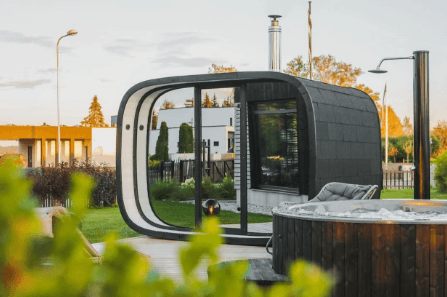
The barrel sauna, the cube cabin with panoramic glass, and the integrated wood-fired or electric outdoor unit all offer the ritual element that sauna traditionalists actually want. The cabin sits in the garden, the user walks out to it, the wood smoke or the heated stones produce a different atmosphere than an indoor electric panel.
The space economics also work better for many UK homes. An outdoor cabin does not displace a bathroom, a bedroom, or a utility space inside the dwelling. It uses garden footprint that previously accommodated a shed or summer house, and most installations fit within UK permitted development rules without planning permission.
Royal Tubs is one of the UK suppliers that has built its business on this convergence, offering barrel saunas, cube cabins, and integrated outdoor units alongside hot tubs and broader outdoor wellness equipment for UK homes.
What the clinical evidence supports
The KIHD study published in JAMA Internal Medicine remains the most-cited piece of clinical evidence for sauna use, with a Finnish cohort of more than two thousand middle-aged men followed across two decades showing significant reductions in cardiovascular mortality, sudden cardiac death, and all-cause mortality among regular sauna users compared with infrequent users. Subsequent peer-reviewed work has examined hypertension, autonomic nervous system regulation, and recovery from physical exertion.
The clinical literature converges on three to four sessions per week of fifteen to twenty minutes as the typical exposure pattern associated with the strongest outcomes. That dose fits comfortably into a domestic routine, particularly when the cabin is metres from the back door rather than across town at a gym.
See also: Best Practices for Installing Home Backup Power
What outdoor sauna installation actually involves
UK permitted development rules typically allow outbuildings up to 2.5 metres in height within two metres of a boundary, and up to 4 metres for dual-pitched roofs further from the boundary, without planning permission. Most outdoor saunas fit comfortably within these rules. Conservation areas and listed properties have additional considerations.
Heating is split between electric and wood-fired. Electric is simpler to operate, requires a dedicated circuit, and is the easier choice for homes without easy wood storage. Wood-fired offers a different experience that many users prefer, with longer setup time per session and clearance requirements around the chimney.
FAQ
Do I need planning permission for an outdoor sauna in the UK? Most fit within permitted development rules without permission. Conservation areas and listed buildings have additional considerations.
Wood-fired or electric? Electric is the practical choice for most homes. Wood-fired is the better experience for users with the space and the patience.
How often should I use a sauna for cardiovascular benefit? The clinical literature centres on three to four sessions per week of fifteen to twenty minutes.