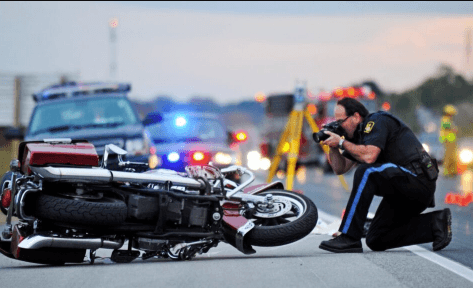
Wisconsin motorcycle accident claims face the same insurer bias that exists in every state, and they face it within a legal framework where that bias has higher stakes than in most. Assumptions about rider speed, lane position, and risk acceptance shape the initial fault assessment in every motorcycle file before any case-specific evidence has been reviewed, and those assumptions produce opening fault attributions that are higher than what the evidence typically supports. In a comparative fault state, inflated fault attributions reduce the recovery proportionally. In Wisconsin, under the 51 percent bar of Wis. Stat. Section 895.045, an inflated attribution that reaches the threshold ends the claim entirely. Every percentage point of fault that objective evidence prevents from being attributed to the rider is a percentage point that cannot accumulate toward the threshold that would eliminate the entire recovery.
A Wisconsin motorcycle accident attorney who handles these cases builds the objective evidence record that specifically addresses each standard fault argument before it can establish the insurer’s initial narrative in the claim file, because in Wisconsin those arguments have a specific financial target and a case-ending consequence if they reach it.
Wisconsin’s Helmet Law and Its Legal Significance
Wisconsin does not require adult motorcycle riders to wear helmets. An adult Wisconsin rider who was not helmeted at the time of a crash has not violated any state statute, which forecloses the negligence per se argument in head injury cases. The general negligence argument that a reasonable person would have worn a helmet remains available to the defense, and under Wisconsin’s 51 percent bar this argument contributes percentage points toward the threshold that ends the claim entirely. A helmeted Wisconsin rider with a head injury removes this argument from the insurer’s fault attribution toolkit.
See also: What Alabama Auto Accident Victims Face Under the Country’s Harshest Fault Rule
The Left-Turn Failure on Wisconsin Roads
The left-turn failure is the most dangerous crash configuration for Wisconsin motorcycle riders, and it is the configuration where the at-fault vehicle’s event data recorder is most directly useful. A vehicle that initiated its left turn with no pre-impact braking did not decelerate because it perceived an approaching hazard. The driver turned without adequate awareness of the approaching rider, and the EDR establishes this in objective terms that the standard speed attribution argument cannot override.
Wisconsin’s Seasonal Riding Environment
Wisconsin’s riding season concentrates from May through October, and the seasonal nature of motorcycle traffic means that drivers in the state have less consistent exposure to motorcycle traffic than in year-round riding markets. This seasonal unfamiliarity does not constitute a legal defense for a driver who fails to yield to an approaching rider, but it may influence how jurors in Wisconsin motorcycle cases think about the driver’s failure to perceive and respond to the motorcycle. The Wisconsin Department of Transportation’s motorcycle crash statistics documents crash patterns and contributing factors for motorcycle accidents on Wisconsin’s road network, providing the regional context for the liability analysis in serious Wisconsin rider injury cases.