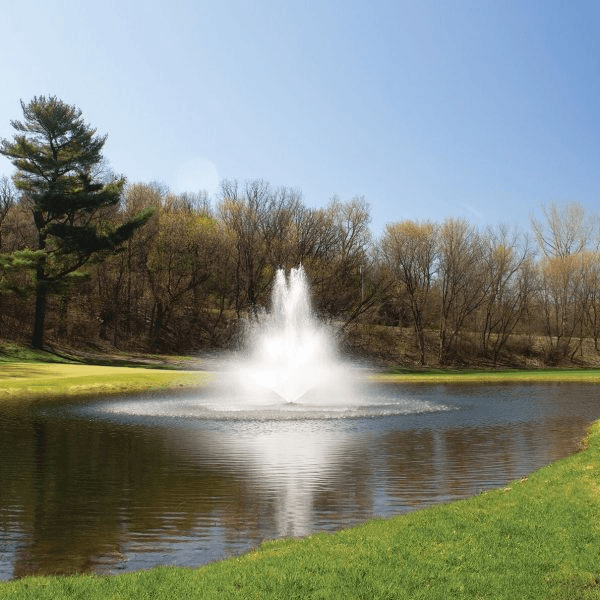
Pond ownership comes with a certain romance. Still water, green surroundings, maybe a few fish catching the light on a warm morning. But that picture tends to fade when the nasty smell arrives, the edges turn green, or the water shifts from clear to something closer to pea soup. The conversation around ponds is changing, and the reasons behind it are entirely practical.
A fountain for the pond settings does far more than lift the visual tone of an outdoor space. It actively moves water, breaks surface tension, and drives oxygen into layers that would otherwise sit stagnant. Property owners who install one often report fewer water quality issues almost immediately. The difference tends to show up within weeks, not months, and it compounds from there.
When Stillness Becomes a Problem
Stagnant Conditions Cost More Than You Think: Still water is not just an aesthetic concern. It creates conditions where biological waste accumulates faster than natural processes can break it down. Algae treatments become a recurring expense when no mechanism exists to help the water regulate itself. Without movement, bottom sediment builds, odors intensify, and property owners find themselves managing symptoms rather than addressing what actually causes them.
The Shoreline Problem Gets Worse Over Time: Muck accumulates along pond edges when water circulation stays poor. That soft, unpleasant layer sitting at the bottom and along the shoreline is decomposing organic matter, and it builds steadily in inactive water. The odor associated with muck is among the most common complaints from pond owners, particularly during warmer months. Chemical treatments address it temporarily, but the underlying cause stays in place.
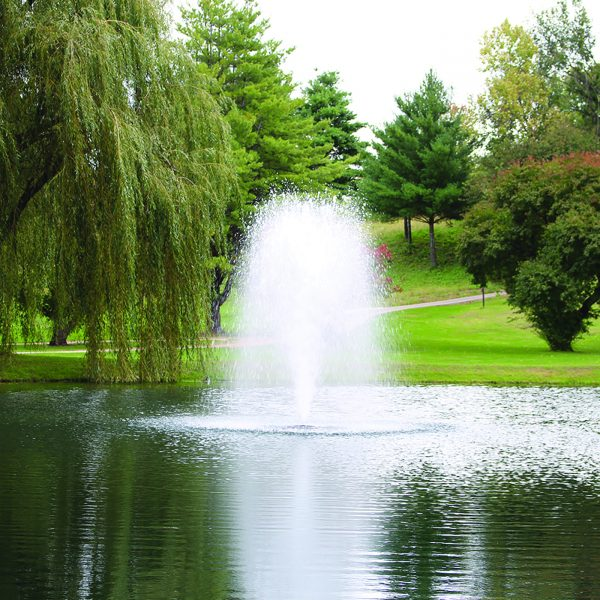
What a Fountain Actually Does to the Water
Circulation Changes the Biology of a Pond: When water moves consistently, oxygen distribution improves across the full water column. Fish tend to show better health indicators in well-oxygenated environments, and the biological activity that keeps water clear becomes more active. A fountain does not resolve every problem on its own, but it creates conditions where the pond manages itself more effectively across an entire season.
Thermal Stratification and What It Costs You: Stagnant ponds often develop distinct temperature layers, with warm water sitting above cooler, oxygen-depleted water below. This separation traps gases near the bottom and creates zones where fish struggle to survive. A fountain running consistently disrupts this pattern by keeping water cycling through its full depth. Property owners who grasp this tend to stop viewing fountain installations as optional.
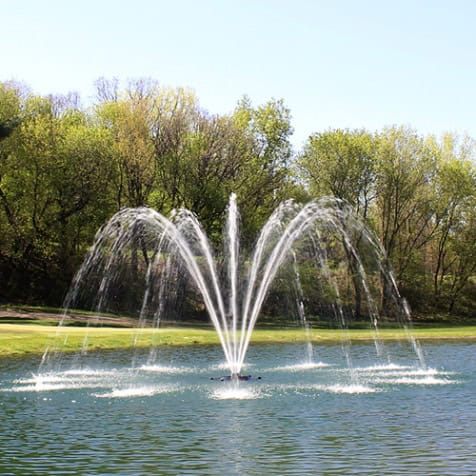
The Costs of Doing Nothing
Recurring Treatments Add Up Faster Than Expected: Chemical solutions for algae, muck, and odor are not cheap, and they rarely address why the problem keeps returning. If the water is not moving, the conditions that produce those problems remain unchanged. Many property owners spend substantially each season on reactive treatments while the actual cause, stagnant and poorly oxygenated water, continues unchecked through the warm months.
Fish Health Becomes a Seasonal Concern: In warmer months, dissolved oxygen levels in still ponds can drop low enough to stress or kill fish. This becomes especially risky during heat spikes when surface evaporation is high and oxygen transfer drops sharply. Property owners with fish populations often discover this at the worst possible moment, after a loss rather than before it. Better circulation tends to reduce that risk considerably.
What to Look for When Choosing the Right Equipment
Selecting the right fountain involves more than matching a spray pattern to pond size. Pond depth, surface area, fish population, and climate all influence the decision. That said, a few factors consistently determine whether an installation performs well or disappoints within a season or two.
- Horsepower relative to pond surface area, since underpowered units will not circulate water effectively across a larger body of water.
- Spray height and pattern, because broader coverage generally means better oxygen transfer across the full pond surface.
- Energy consumption, since a fountain running through the season will affect utility costs noticeably over time.
- Build quality and corrosion resistance, as outdoor water equipment takes constant exposure from sun, cold, and biological material.
- Ease of seasonal maintenance, including whether the unit can be removed and serviced without specialized tools or outside support.
See also: Beyond Physical Samples: Reducing Waste and Costs with 3D Garment Simulation
How the Thinking Has Shifted
From Ornament to a Functional Investment: Following essential landscaping tips from professionals who manage ponds regularly, it becomes clear that fountain placement and sizing are increasingly treated as infrastructure decisions. The question used to be whether a property looked better with a fountain. Now it is often whether the water quality can hold up without one, which is a meaningfully different kind of conversation to be having.
Preventative Logic Takes Hold: There is a point where property owners stop reacting to recurring pond problems and start trying to prevent them instead. Fountains tend to become part of that shift. A unit running consistently through the season does far less long-term damage than repeated chemical interventions, emergency aeration, and fish replacement. The investment calculus, even before accounting for any aesthetic improvement, tends to favor the fountain.
The Pond You Actually Want to Own
A pond that stays clean, biologically stable, and genuinely pleasant to be near does not happen by accident. It reflects equipment choices and a maintenance strategy built around keeping water active rather than treating it after problems appear. If water quality has been a recurring frustration, a purpose-built fountain installation is often the most durable solution available. Explore fountain options designed specifically for long-term water health, and make a choice built to hold up season after season.