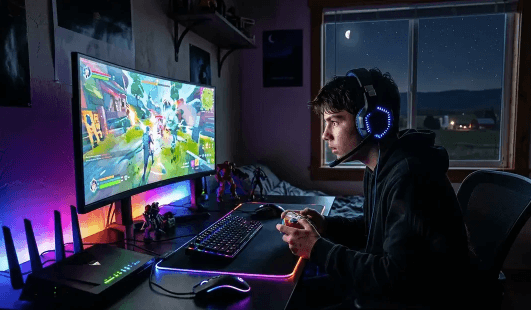
Gaming in rural areas has come a long way. A few years ago, players living outside city limits had to accept high ping, constant disconnections, and upload speeds that turned every online match into a guessing game. Today, the landscape has shifted significantly. With new wireless technologies rolling out across the country and providers expanding their rural coverage, rural gamers finally have real options worth considering.
But not every provider is built for gaming, and choosing the wrong one can mean spending months dealing with lag, data caps, and throttled speeds. This guide breaks down what actually matters for rural gaming, which technologies hold up under pressure, and which providers deliver on their promises in 2026.
Why Rural Gamers Face Unique Challenges
Urban and suburban gamers rarely think about connection type because fiber and cable options are nearly everywhere. Rural players do not have that luxury. Most rural areas are still underserved by traditional broadband, which means gamers have to rely on solutions like fixed wireless, satellite, or mobile LTE networks.
The core issue is not just speed. Gaming depends heavily on latency, which is the time it takes for data to travel from your device to the game server and back. A connection with 50 Mbps download speed but 200ms latency will feel far worse in a competitive game than a 25 Mbps connection with 30ms latency. Rural internet solutions vary dramatically in this area, which is why choosing the right type of connection matters more than looking at speed alone.
Internet Types Available in Rural Areas
Satellite Internet
Satellite internet has the widest availability of any rural option since it covers virtually anywhere with a clear view of the sky. Providers like Starlink have dramatically improved latency compared to older geostationary satellite systems, bringing it down to roughly 20 to 60ms in many areas. That is a significant improvement, but weather interference and occasional service interruptions can still affect gameplay during storms or heavy cloud cover.
4G LTE and 5G Fixed Wireless
Fixed wireless internet using 4G LTE or 5G signals from cellular towers has become one of the most reliable options for rural gaming. These networks typically deliver latency between 30ms and 80ms, which is well within the acceptable range for most online games including fast-paced shooters and battle royales. Coverage depends on proximity to cell towers, but providers continue expanding their networks into rural communities each year.
Fixed Wireless Access (FWA)
Some regional internet service providers offer fixed wireless access through dedicated towers, sending a signal directly to a receiver installed at your home. This can deliver strong, consistent speeds with low latency if you are within range of a tower. Availability varies significantly by location, so checking with local providers is worthwhile before ruling this option out.
What to Look for in a Rural Gaming Internet Provider
Before committing to a rural internet plan for gaming, run through this checklist to make sure the provider actually meets your needs:
- Latency under 100ms for general online gaming, and under 50ms if you play competitive or fast-paced titles
- Unlimited data plan with no throttling after a monthly cap so large game updates and long sessions never slow you down
- Consistent connection stability with minimal ping spikes, not just a good average speed on paper
- Strong coverage in your specific location confirmed through the provider’s coverage map and real user reviews in your area
- Quality router or gateway hardware optimized for LTE or 5G signals to reduce packet loss and improve reliability
- No long-term contracts or flexible cancellation terms so you are not locked in if the service underperforms
- Responsive customer support that can help troubleshoot signal or connectivity issues quickly
- Reasonable equipment setup that does not require professional installation or complex configuration to get started
See also: Cracking the Code: Why Data Structures are the Backbone of US Tech Careers
Top Internet Providers for Rural Gamers in 2026
Several providers have emerged as strong options for rural gamers this year. Here is a look at the ones worth your attention.
UbiFi
UbiFi has built a strong reputation specifically among gamers living outside urban areas. The service uses a nationwide 4G LTE and 5G network to deliver low-latency connections that hold up well for competitive gaming. Gamers who have struggled with satellite lag will find the difference noticeable. For anyone researching the internet for gaming in rural areas, UbiFi stands out because it is designed with rural gamers in mind, offering unlimited data plans and a dedicated focus on keeping latency as low as possible. MoFi router users can also access the Cloudlink service, which helps eliminate NAT type errors that frequently interrupt console gaming sessions.
Starlink
Starlink has become a household name in rural connectivity since its expansion across the United States. Its low-earth orbit satellite design gives it a clear latency advantage over older satellite systems, and speeds regularly exceed 100 Mbps in many rural locations. Gaming performance is generally solid for casual and mid-tier competitive play, though occasional latency spikes can occur during peak usage hours. Starlink is a compelling option if cell tower coverage is unavailable in your area.
Rise Broadband
Rise Broadband serves rural communities across the Midwest and Western United States through a fixed wireless network. It offers reasonable latency and does not rely on satellite technology, which makes it more consistent during adverse weather. Coverage is limited to specific regions, so availability will depend on your exact location.
T-Mobile Home Internet
T-Mobile has aggressively expanded its home internet service into rural areas using its 4G LTE and 5G network. The plan comes with no data caps, and performance has improved substantially as the network has grown. Latency is competitive with other wireless options, making it a solid choice for gamers in areas with good T-Mobile coverage.
Tips to Improve Your Gaming Experience on Rural Internet
- Use an Ethernet cable instead of Wi-Fi to cut out wireless interference and shave a few milliseconds off your latency right away.
- Limit active devices on your network while gaming so your bandwidth is not competing with video streams or background app updates.
- Position your router or receiver in a central spot with a clear line of sight toward the cell tower or satellite for the strongest possible signal.
- Update your router firmware regularly to ensure you are getting the latest stability and performance improvements from the manufacturer.
- Check your provider’s coverage map and compare it against user reviews specific to your area before committing to a plan.
The Future of Rural Gaming Connectivity
The outlook for rural internet continues to improve. Government programs aimed at expanding broadband access to underserved communities are pushing providers to extend coverage further into rural zones. Satellite technology is evolving rapidly, and 5G networks are reaching areas that seemed unreachable just a few years ago.
For rural gamers, this means more competition among providers, which tends to drive better pricing and improved service quality over time. The days of accepting unplayable lag as the cost of rural living are gradually becoming a thing of the past.
Conclusion
Choosing the right rural gaming internet provider in 2026 comes down to prioritizing latency, stability, and unlimited data over raw speed numbers. Providers like UbiFi, Starlink, and T-Mobile Home Internet have made rural gaming genuinely viable. Take time to check coverage in your exact location, read real user feedback, and match the plan to how you actually game. The right connection makes all the difference.