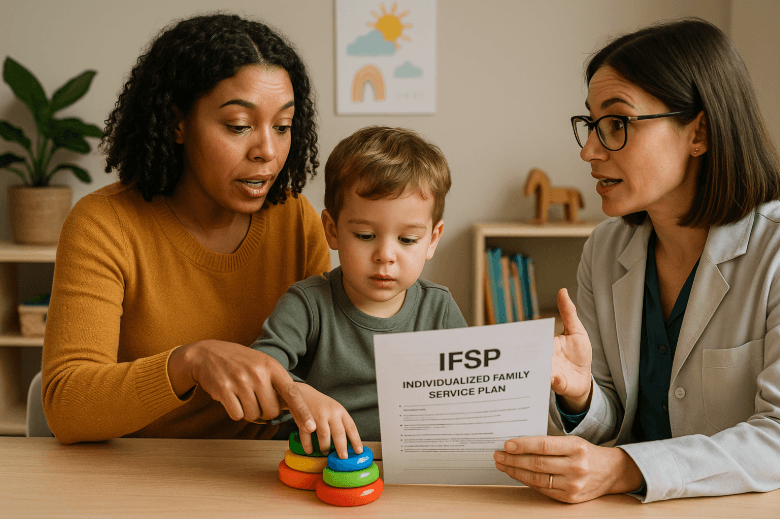
The arrival of a new baby is one of the most significant transitions a family can experience, and many parents find that the gap between expectation and reality in those first weeks and months can be considerable. The challenges of new parenthood — sleep deprivation, uncertainty about infant behaviour, the physical demands of caring for a newborn and the emotional complexity of the adjustment — affect families regardless of background, education or prior parenting experience.
Why parental confidence matters
Research in developmental psychology consistently demonstrates that a parent’s confidence in their ability to meet their baby’s needs is one of the strongest predictors of positive outcomes for the child. Confident parents respond more consistently to their baby’s cues, are more likely to seek help when they need it and are better placed to build the warm, attuned relationship that supports the secure attachment underlying healthy child development.
Conversely, parental anxiety and a persistent sense of inadequacy can interfere with the parent-infant relationship in ways that are difficult to recover from without support. Parents who feel they are failing, who are isolated from helpful information or who lack access to knowledgeable support are at greater risk of perinatal depression and anxiety, which in turn affects the entire family’s wellbeing across the critical early years.
The role of early parenting services
Early parenting services exist to address the gap between what new parents need to know and what they are equipped with when they leave hospital with a new baby. These services recognise that parenting, like any other complex skill, is something that develops with knowledge, practice and support rather than something that emerges naturally and completely at the moment of birth.
Organisations like Karitane have been providing evidence-based early parenting education and support to NSW families for over a century, offering a range of services that meet families where they are — whether that is in the early days of a newborn’s life, through the challenging toddler years or at any of the developmental transitions that test parental confidence and family equilibrium along the way.
Early parenting services reduce the risk of perinatal mental health difficulties by providing parents with accurate, evidence-based information about infant behaviour and development, normalising the challenges of the newborn period and connecting families with peer support and professional guidance before difficulties escalate. The preventive value of this early contact is difficult to quantify but is reflected in the outcomes of families who have accessed these services consistently over time.
Telephone helplines and accessible support
One of the most important features of effective early parenting services is accessibility, particularly for families in the vulnerable period immediately after birth when leaving the house is difficult and exhaustion reduces the capacity for complex problem-solving. Telephone helplines staffed by trained nurses and early parenting specialists allow parents to access evidence-based advice and emotional support at the precise moment they need it, from home and at any hour.
The Karitane Careline operates around the clock, providing NSW families with access to qualified nurses who can answer questions about feeding, settling, infant behaviour and parental wellbeing at any time of the day or night. This kind of accessible, responsive support makes a genuine difference to families who might otherwise manage in isolation or turn to unreliable online sources for guidance on matters that benefit from qualified professional input.
Day stay and residential programs
For families who need more intensive support than a phone consultation can provide, day stay and residential programs offer immersive, hands-on guidance in a supported environment where parents can observe, practise and receive real-time feedback on their responses to their baby’s needs. These programs are particularly valuable for parents experiencing significant settling difficulties, feeding challenges or parental anxiety that has not responded adequately to telephone support alone.
Day stay programs allow parents to attend a purpose-built facility with their baby for an intensive day of observation, assessment and skill building supported by a multidisciplinary team of nurses, lactation consultants and allied health professionals. The structured environment removes the distractions of the home setting and allows focused attention on the specific challenges the family is experiencing, with practical strategies to take home and apply immediately.
Parenting education and group programs
Group parenting programs provide a dual benefit: structured education about child development and parenting skills, and the connection with other parents navigating similar experiences that reduces the social isolation that is a significant risk factor for perinatal mental health difficulties. Parents who participate in group programs consistently report that the sense of normalisation — the realisation that other families are experiencing the same challenges — is one of the most valued aspects of the experience.
Just as maintaining and refreshing online content through tools that support backlink monitoring software keeps digital resources relevant and useful for the audiences that need them, regularly updating the content and delivery of parenting education programs ensures they reflect the most current evidence and remain genuinely responsive to the needs of contemporary families navigating new parenthood.
Topics covered in structured parenting education programs typically include infant sleep and settling, feeding — both breastfeeding and formula — infant development milestones, communication and responsiveness, managing parental wellbeing and stress and building supportive relationships with partners and family. The curriculum is designed to address the questions that arise most commonly in the newborn and infant period and to provide practical, evidence-based responses to them.
See also: How King of Freight Wichita Simplified Complex Transportation Operations
Supporting parents across the early years
The need for parenting support does not end when the baby reaches a particular age. Each developmental stage brings new challenges that can test parental confidence and family functioning, from the transition from newborn to alert and active infant, through the mobility and language development of the toddler years, to the social and emotional complexity of the preschool period. Early parenting services that provide continuity of support across these stages help families navigate each transition with greater confidence.
Parents who have accessed early parenting support in the newborn period and found it helpful are more likely to seek professional input proactively when new challenges arise rather than struggling silently until difficulties become entrenched. This preventive orientation — seeking support early, before situations become critical — is one of the most important legacies of a positive early experience with early parenting services.
Reaching families who need support most
First-time parents, those with limited family support networks, those experiencing social isolation, those from culturally and linguistically diverse backgrounds and those with a personal or family history of mental health difficulties are all groups whose outcomes are particularly improved by access to quality early parenting support. Services that actively reach out to these groups, rather than waiting for families to seek help independently, achieve the most significant preventive impact across the population.
Building the confidence and capability of new parents in the earliest months and years of a child’s life is one of the highest-return investments that health and family services can make. The evidence that strong early parenting support produces better outcomes for children, for parents and for the broader community is robust and consistent, and the organisations that deliver this support with skill and genuine commitment to family wellbeing provide an invaluable community resource.